
Location
Austria, Styria, St. Erhard in der Breitenau
Parish Church St Erhard (Pfarrkirche Hl Erhard)
St Erhard/Breitenau
Artwork
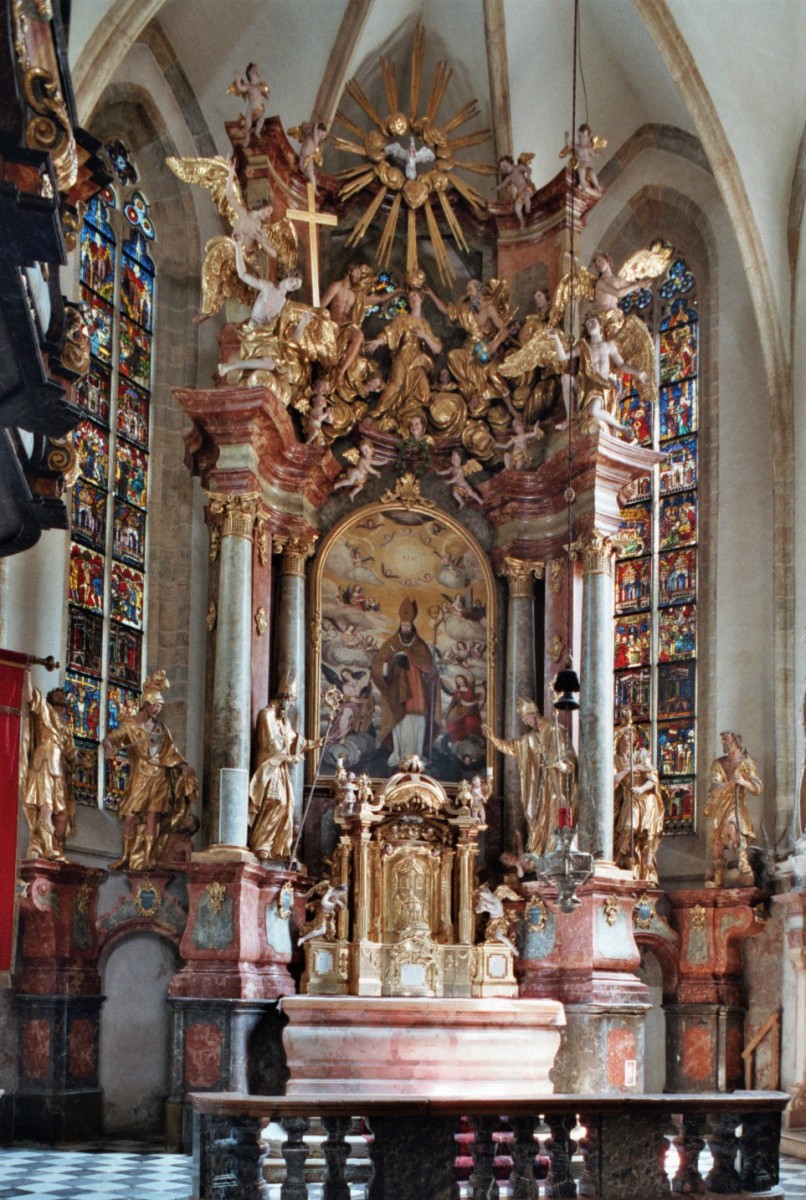
The main altar of the parish church of St Erhard/Breitenau
Type
High altar
Critical History
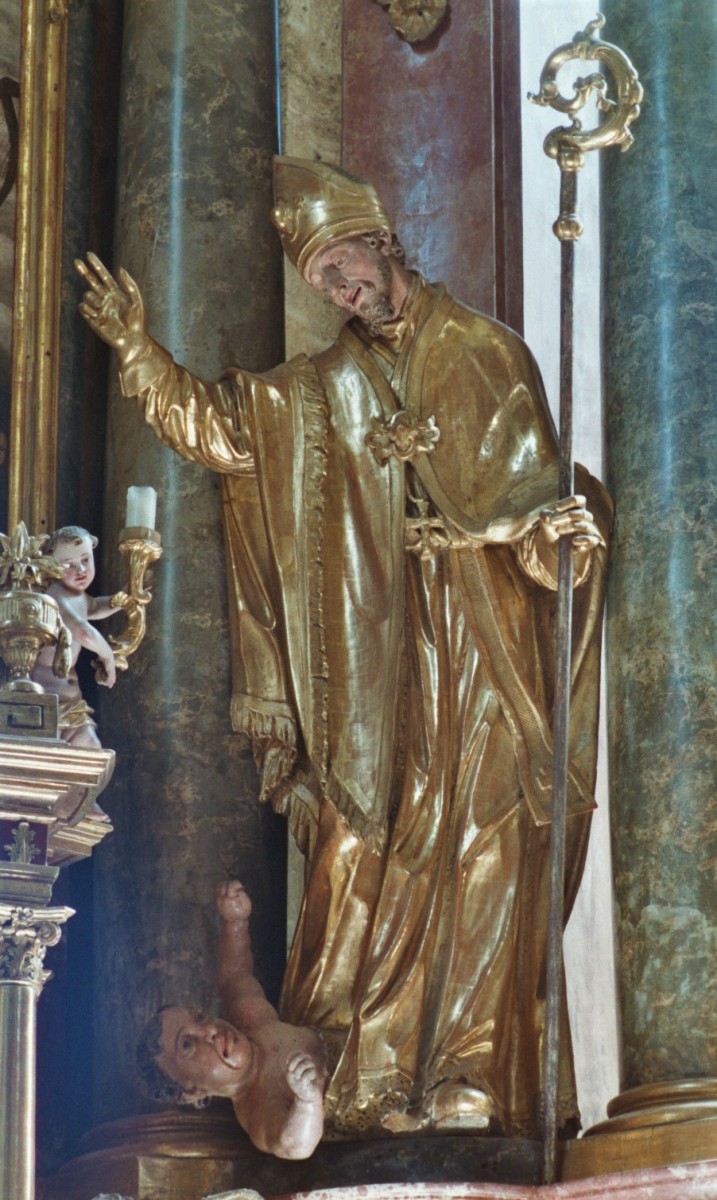
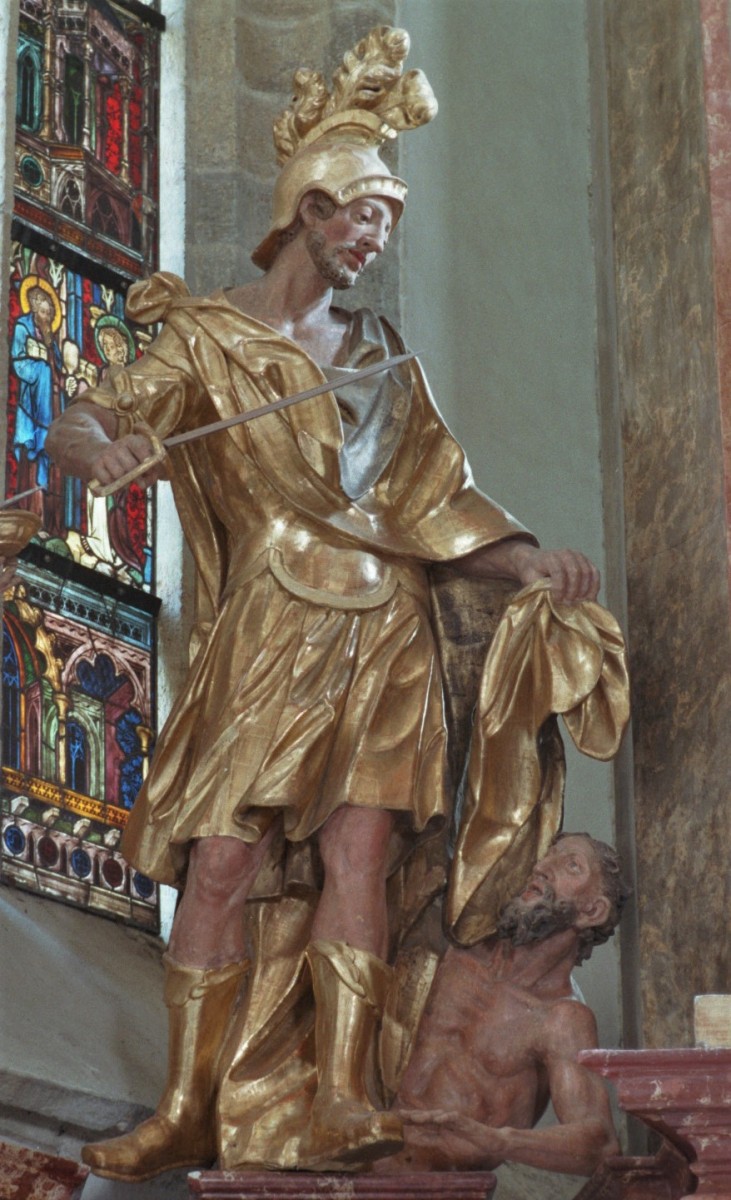
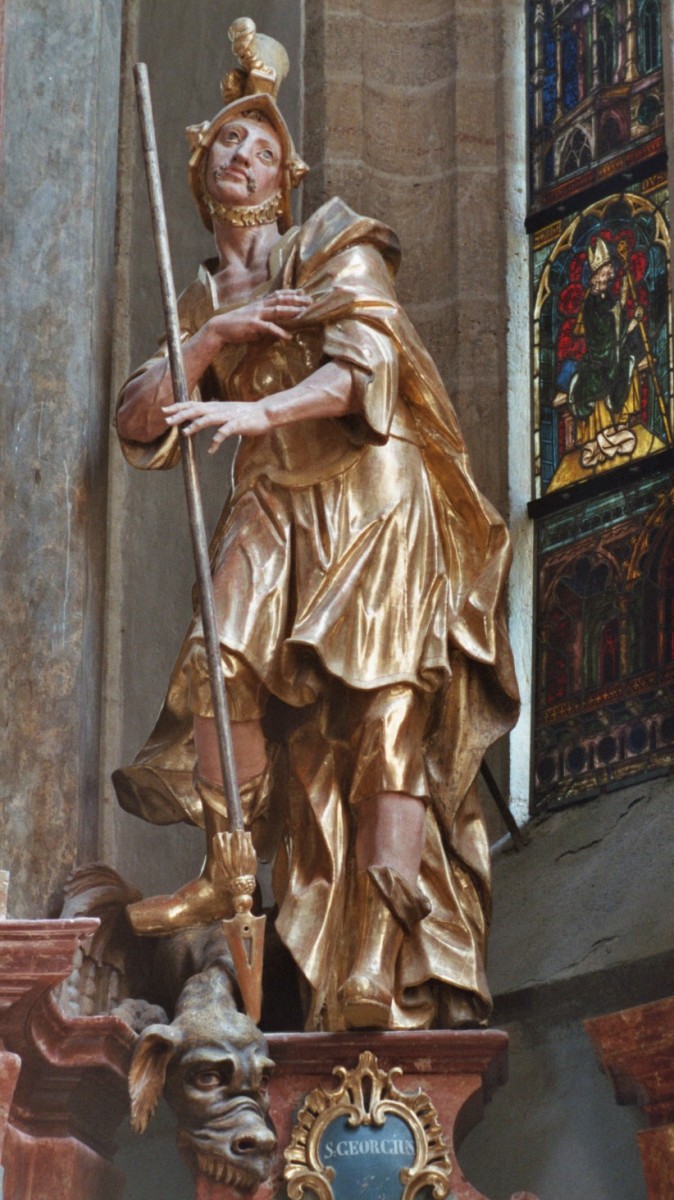
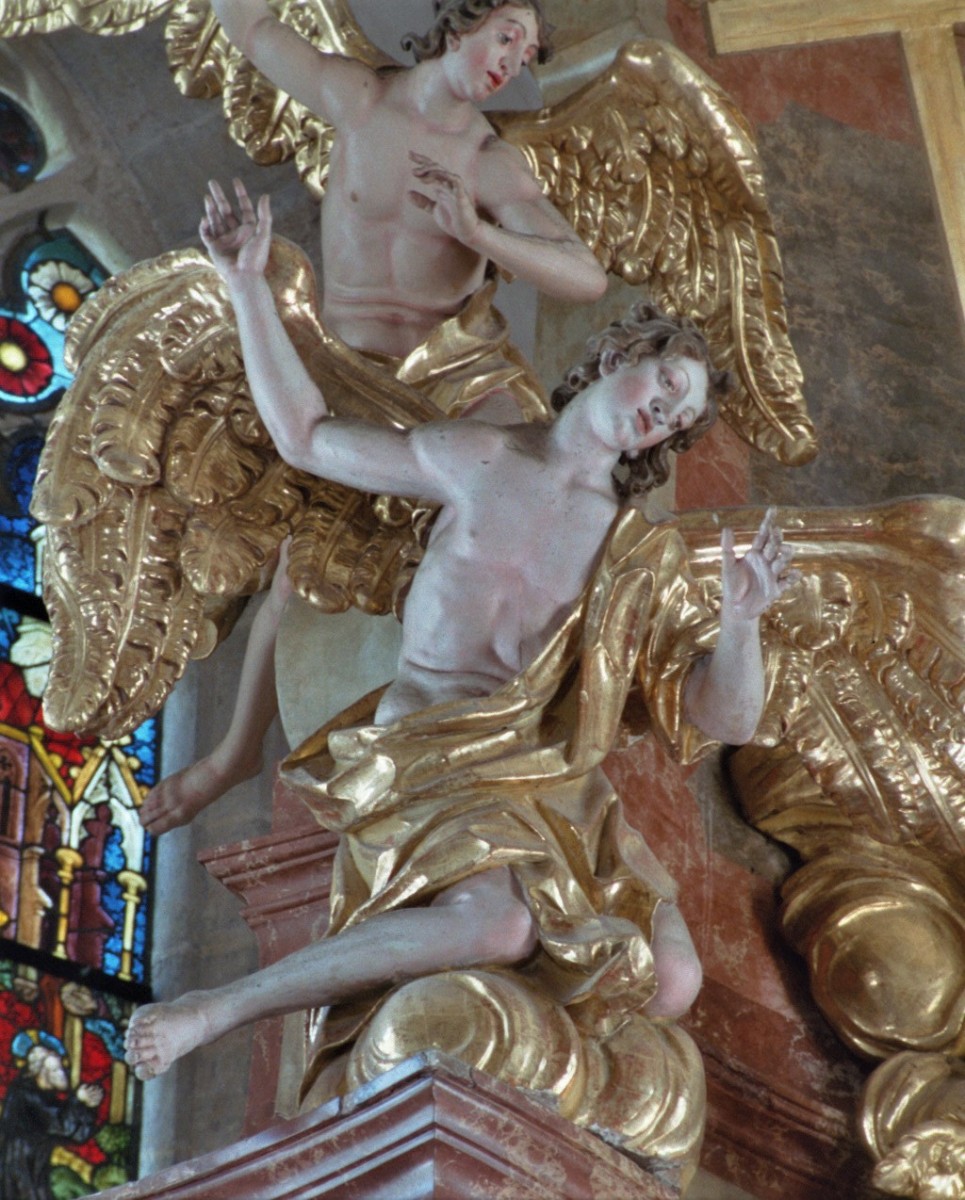
The interior of the church represents a harmoniously combination of gothic building, luminous glass paintings and baroque furnishings. The impressive high altar is located in the chevet with 5/8 choir extension and was created between 1744 and 1746 by Philipp Jakob Straub.1 The high altarpiece is flanked by six almost life-size sculptures: Innermost, there are St Donate and St Valentin with mitre, crozier and respectively one attribute at their feet (cow and epileptic). In the middle there are St Martin, who is handing a piece of his mantle to the poor at his feet, and St George whose right foot is resting on the defeated dragon. At the outer edge we see St Patricius with one arm outstretched while the left hand holds a golden cup as well as St Wendelin, leaning on a stick and with a lying goat at his feet. The upper zone is dominated by the central motif of the Coronation of the Virgin Mary, which is surrounded by several winged putto-heads and vivid putti. At the cranked entablature there are two angels with wings wide spread and outstretched arms. They are genuflecting on a cloudscape. Above them, there are two further angels showing expressive gestures.
The sculptures are attributable to Straub’s middle period, in which the carved figures appear very expressive and vivacious concerning their gesture, clothing and physiognomy.2 They are comparable to the sculptures of the Narcissus and Sebastian altar in Rein (1742/43) and to those of the Nepomuk altar (1749/50) in the parish church of Graz.
Construction / Execution
The high altar shows peripteral portals and a forward swinging column system, which leads to a three-dimensional appearance of the altar.
Components
- Carpentry
- Completed: 1744 – 1746
- Technique(s): sawing
- Material(s): wood
- Sculpture
- Author: Philipp Jakob Straub (Wiesensteig 1706 – Graz 1774)
- Completed: 1744 – 1746
- Technique(s): wood carving
- Material(s): wood
- Polychromy
- Completed: 1744 – 1746
- Material(s): gold leaf, red bole
Images
- The high altar in the parish church of St Erhard/Breitenau (photo by Diocesan Museum Graz, Barbara Murg, 2007)
- St Donate, high altar, St Erhard/Breitenau (photo by Diocesan Museum Graz, Barbara Murg, 2007)
- St Valentine, high altar, St Erhard/Breitenau (photo by Diocesan Museum Graz, Barbara Murg, 2007)
- St Martin, high altar, St Erhard/Breitenau (photo by Diocesan Museum Graz, Barbara Murg, 2007)
- St George, high altar, St Erhard/Breitenau (photo by Diocesan Museum Graz, Barbara Murg, 2007)
- Angel on the entablature (left), high altar, St Erhard/Breitenau (photo by Diocesan Museum Graz, Barbara Murg, 2007)
Catalogue entry prepared by Eva Klein and Christina Pichler
Recommended citation: Eva Klein and Christina Pichler, The main altar of the parish church of St Erhard/Breitenau , in: TrArS – Tracing the Art of the Straub Family, 2018, (accessed 01/07/2026) URL
