
Location
Croatia, City of Zagreb, Zagreb
Zagreb City Museum (Muzej grada Zagreba)
Original location:
Croatia, City of Zagreb, Zagreb
Parish church of St Mark (Župna crkva sv. Marka)
Artwork
The group of Coronation of the Virgin Mary in the Parish church of St Mark in Zagreb
Type
Sculptural group
Inscriptions
- S.D.M. ANNA. SAN (C) N C NATA DE GERCHELICH 1760 (on the cartouche on the altar of Conversion of St Paul)
Critical History
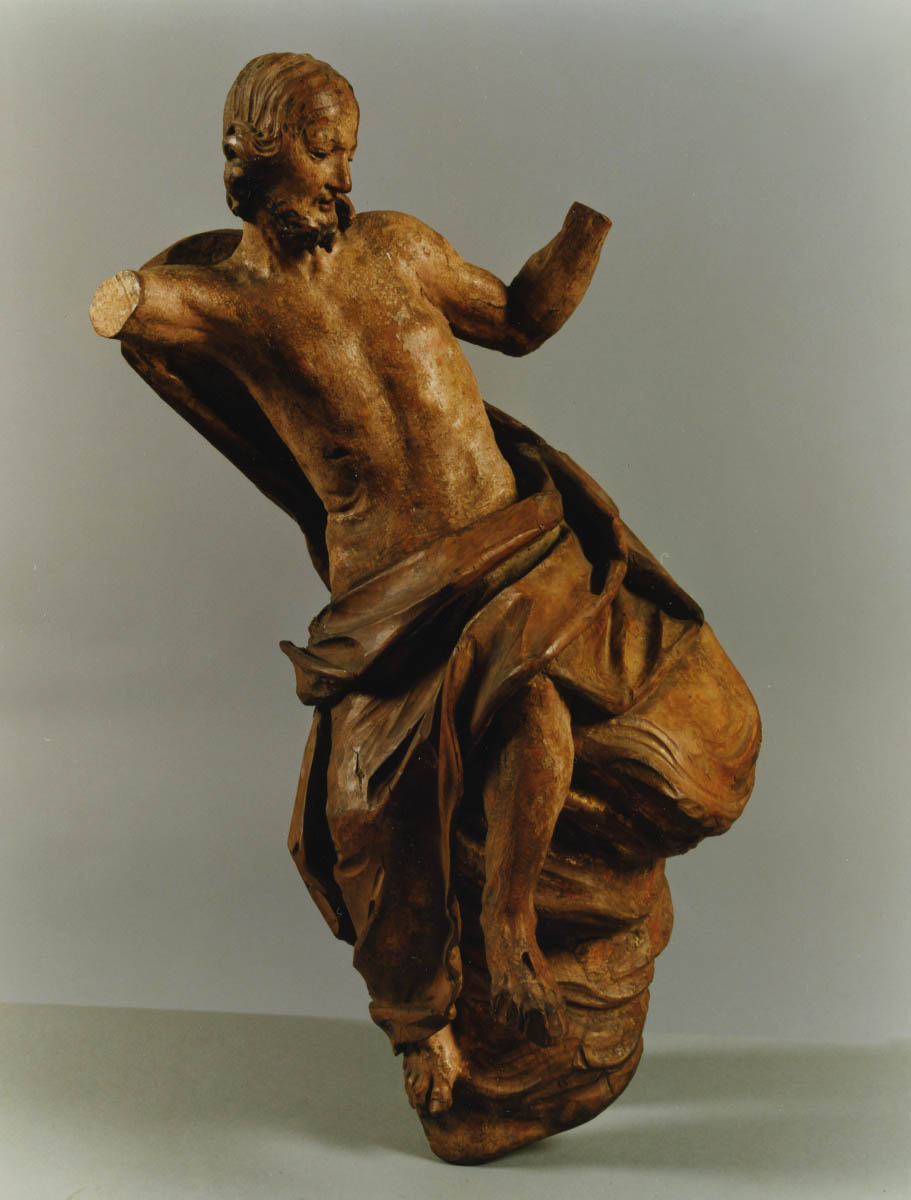
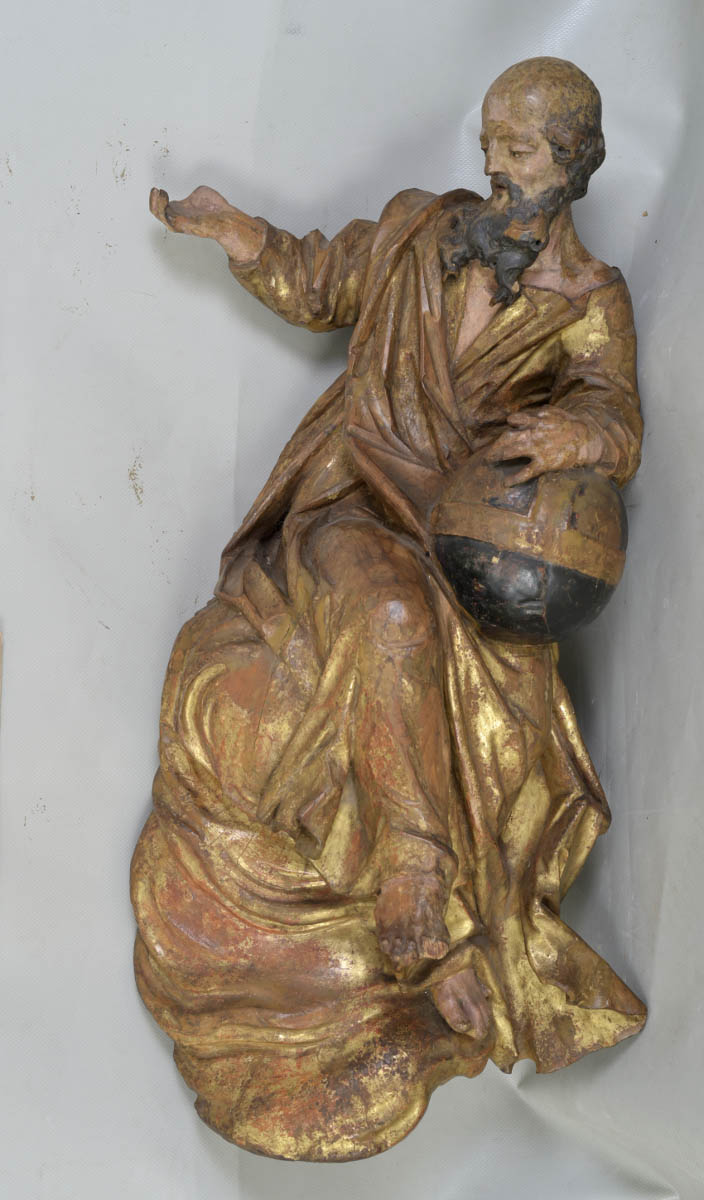
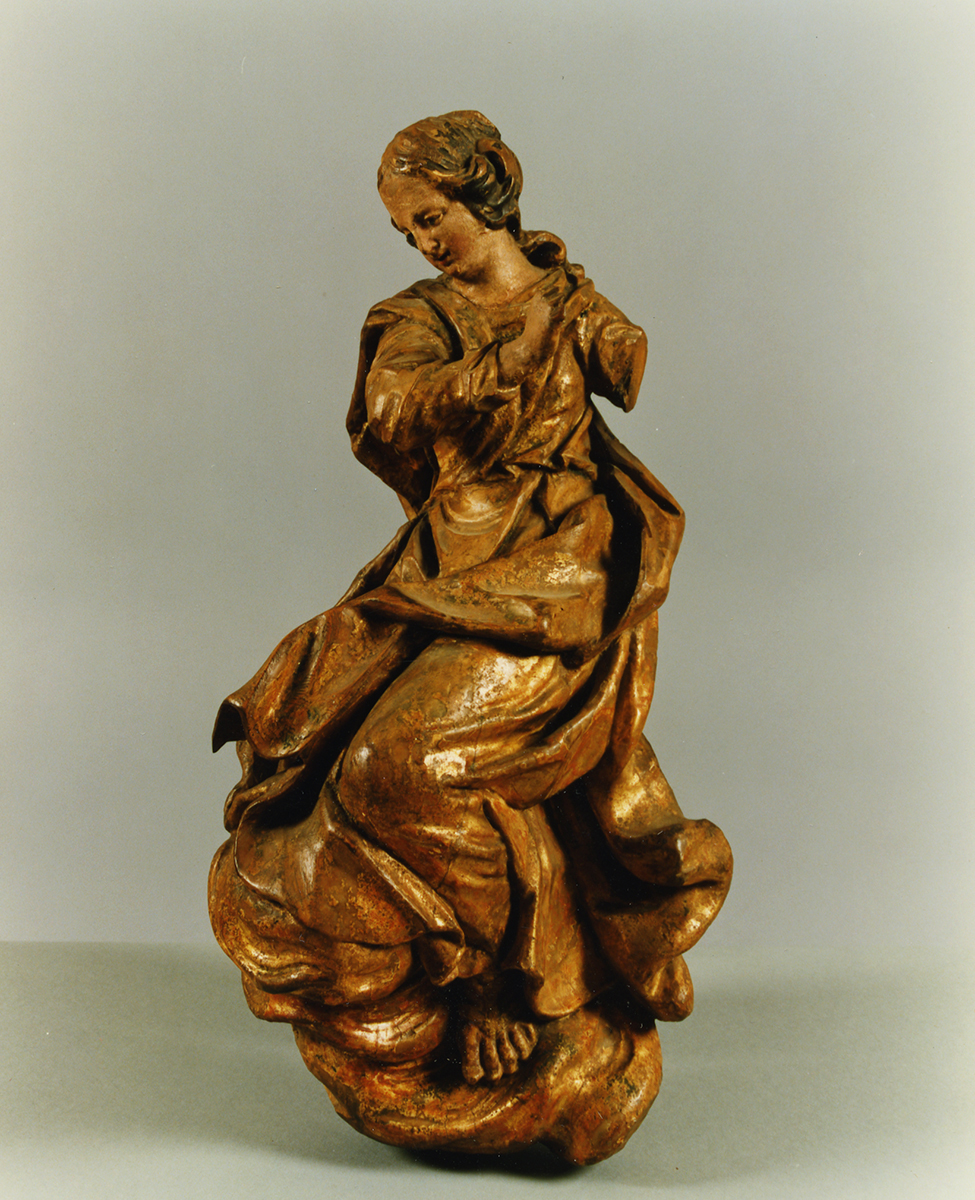
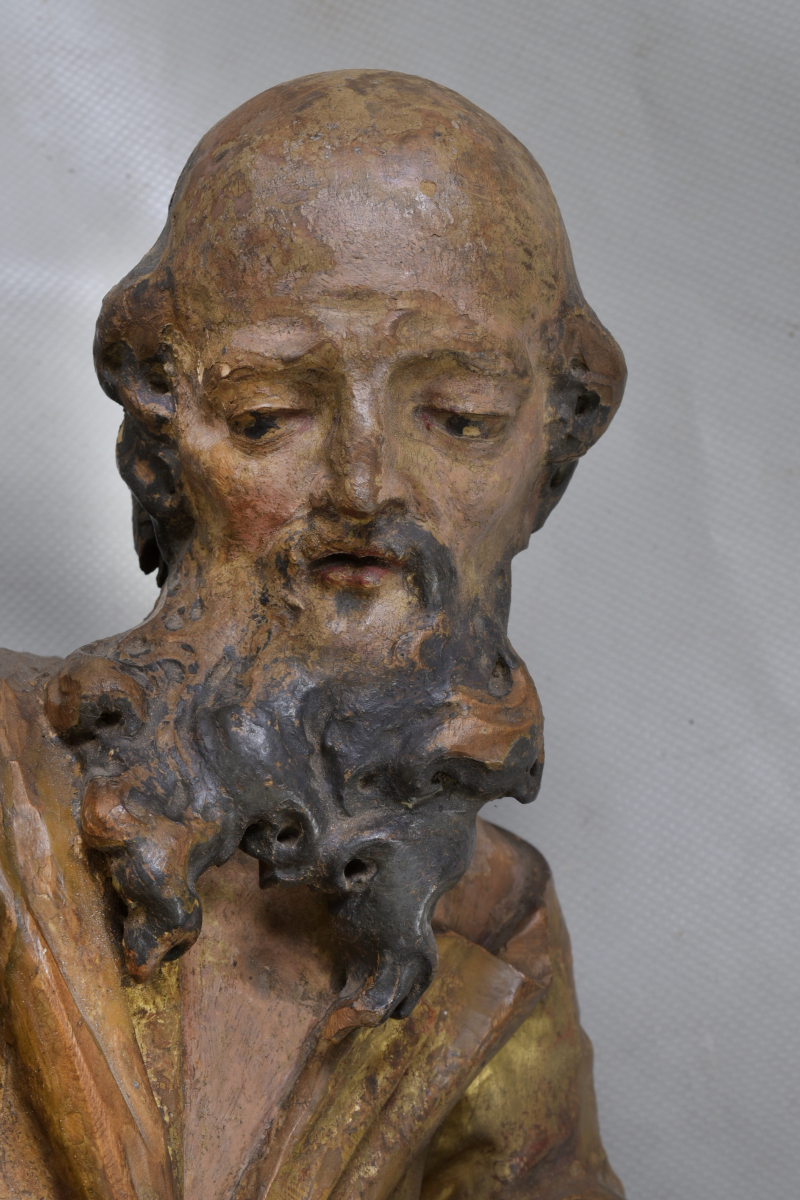
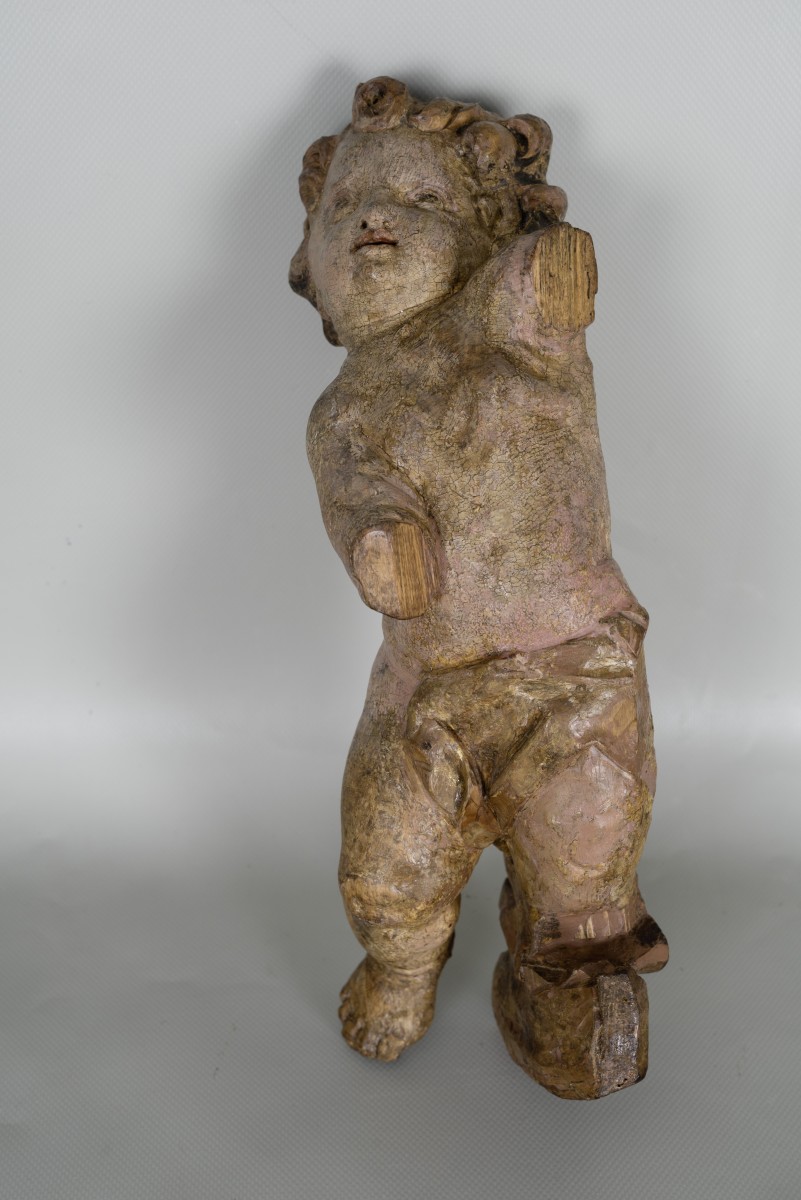
The sculptural composition of the Coronation of Virgin Mary, consisting of Holy Father, Christ, Virgin Mary and two puttos, was once a part of the attic of the altar of Conversion of St Paul. It was situated on the left side of the triumphal arch of the parish church of St Mark in Zagreb and commissioned by the bootmakers' guild in 1760.1 It was first mentioned in the text of the Canonical visitation in 1771,2 but the restoration works carried out on the altar in 1991 and 2001 restored the original polychrome layer with the inscription on the cartouche (Ins. 1) revealing the date and the donor (probably of a part of gilding).3
However, along with the rest of the altars, it was removed during the Schmidt-Bollé's renovation of the church in 1876–1882. The dismantled altar was first bought by the Halper Sigetski family and placed in their manor in Zajezda, but after the World War II it was sold to the Croatian History Museum in Zagreb (inventory number HPM/PMH 19510), where it is still preserved, whereas the sculptures of the attic are now kept in the Zagreb City Museum.4
The sculptural group of the Coronation of Virgin Mary has not yet been researched, whereas Doris Baričević had attributed the remaining altar with the sculptures of St Paul and the two unknown female saints first to the sculptor Josip Trenk (Josephus Trenkh, Trenchar, Krenkl), but in 2008 she noted they were closer to the workshop of Veit Königer.5
Given their stylistic and formal characteristics, the sculptural group of the attic can be connected with the works of Franz Anton Straub.6 If so, they might be the only works he made in Zagreb where he lived at the time.
Holy Father (MGZ-2615) 68 x 43 x 20 cm
Christ (MGZ-1286) height 68 cm
Virgin Mary (MGZ-2616) height 65 cm
Putto I (MGZ-2701) 36 x 13 x 12 cm
Putto II (MGZ-2703) 36 x 19 x 13 cm
Construction / Execution
The entire attic zone of the altar is now lost, therefore its design can only be speculated on.
Components
- Sculpture
- Author: Franz Anton Straub (Wiesensteig 1726 – Zagreb ca. 1774)
- Completed: 1760
- Patron(s): Bootmakers' guild, guild
- Technique(s): wood carving
- Material(s): limewood
- Polychromy
- Completed: 1760
- Patron(s): Gerčelić Ana, individual devotion
- Technique(s): tempera, water gilding
- Material(s): gold leaf
- Polychromy
- Red colour on the back of the Holy Father
- Material(s): acrylic, calcium carbonate, calcium sulphate dihydrate, natural terpen resin, protein
Comment
The sculptures were carved in limewood.7
Conservation-restoration
- 1971–1972
Strategy: removing dirt, removing partial repairs
Approach to the presentation of losses
Reintegration of losses – other: partial
Reconstruction of losses: partial
Materials: beeswax, natural terpen resin, turpentine oil
Treatment Description
The sculptures were restored by Eva Winkler.
- 2016–2017
Strategy: removing dirt
Approach to the presentation of losses
Reintegration of lacunae: partial
Reconstruction of losses: partial
Materials: Aquazol 200, brown ochre, buffer, Champagne chalk, ethyl alcohol, gold powder, gouache, gum arabic, isopropyl alcohol, Laropal A 81, Plexigum PQ 611, Plextol D 498, polyester canvas, PVA adhesive, Shellsol T, watercolours, wood powder, yellow ochre
Treatment Description
The sculpture of the Holy Father and the two angels were restored in the Croatian Conservation Institute by Ksenija Škarić.8
- 2019
Materials: 3M Spray Mount, Japanese tissue
Treatment Description
The three sculptures were presented to the public at the exhibition The Height of the Baroque Era: The Art of the Straub Family in the Former Zagreb Archdiocese, held at Domitrović Tower in Zagreb (19th September – 3rd November 2019). The minimal intervention, including curface cleaning and polychromy consolidation, was carried out to prepare sculptures for exhibiting.
Images
- The sculpture of Christ, MGZ-2624 (Zagreb City Museum, MGZ F-6880)
- The sculpture of the Holy Father, MGZ-2615 (Croatian Conservation Institute Photo Archive, photo by Nikolina Oštarijaš, 2016)
- The sculpture of Virgin Mary, MGZ-2616 (Zagreb City Museum, MGZ F-6877)
- The sculpture of the Holy Father, detail (Croatian Conservation Institute Photo Archive, photo by Nikolina Oštarijaš, 2016)
- The sculpture of angel, MGZ-2701 (Croatian Conservation Institute Photo Archive, photo by Nikolina Oštarijaš, 2017)
- The sculpture of angel, MGZ-2703 (Croatian Conservation Institute Photo Archive, photo by Nikolina Oštarijaš, 2017)
Catalogue entry prepared by Martina Ožanić and Ksenija Škarić
Recommended citation: Martina Ožanić and Ksenija Škarić, The group of Coronation of the Virgin Mary in the Parish church of St Mark in Zagreb, in: TrArS – Tracing the Art of the Straub Family, 2018, (accessed 26/01/2026) URL
