Location
Austria, Styria, Hartberg
Pilgrimage church Maria Lebing (Wallfahrtskirche Maria Lebing)
Maria Lebing
Artwork
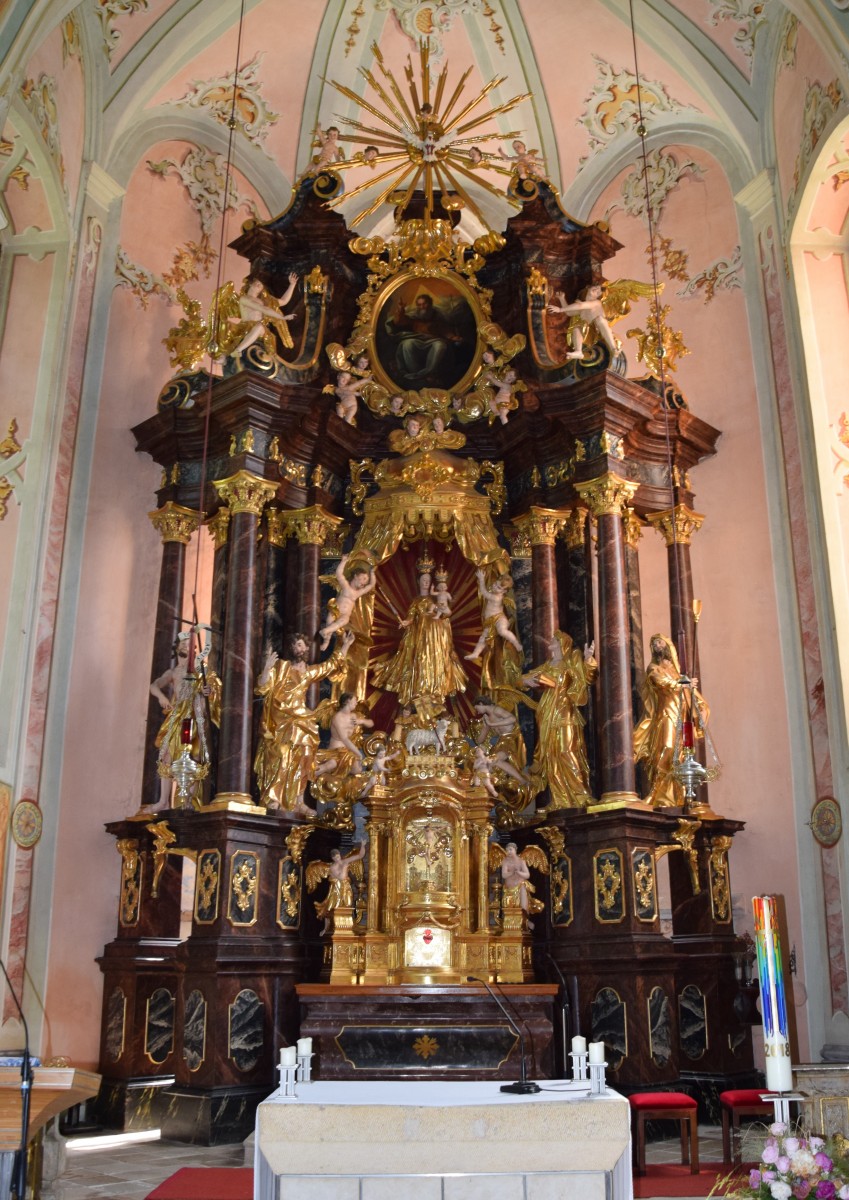
The high altar of the pilgrimage church Maria Lebing in Hartberg
Type
High altar
Critical History
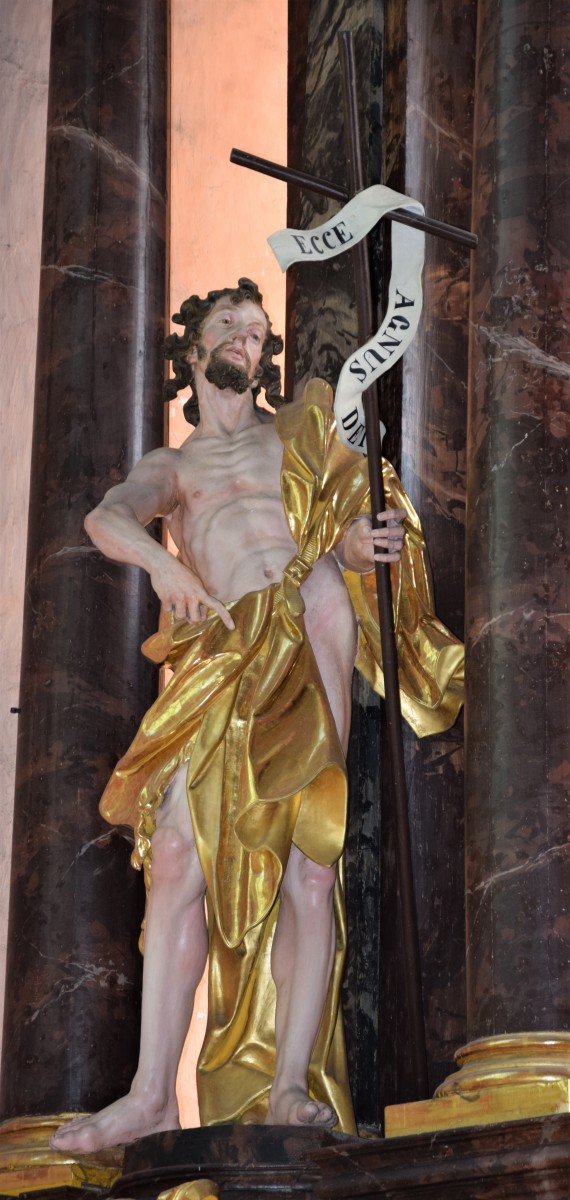
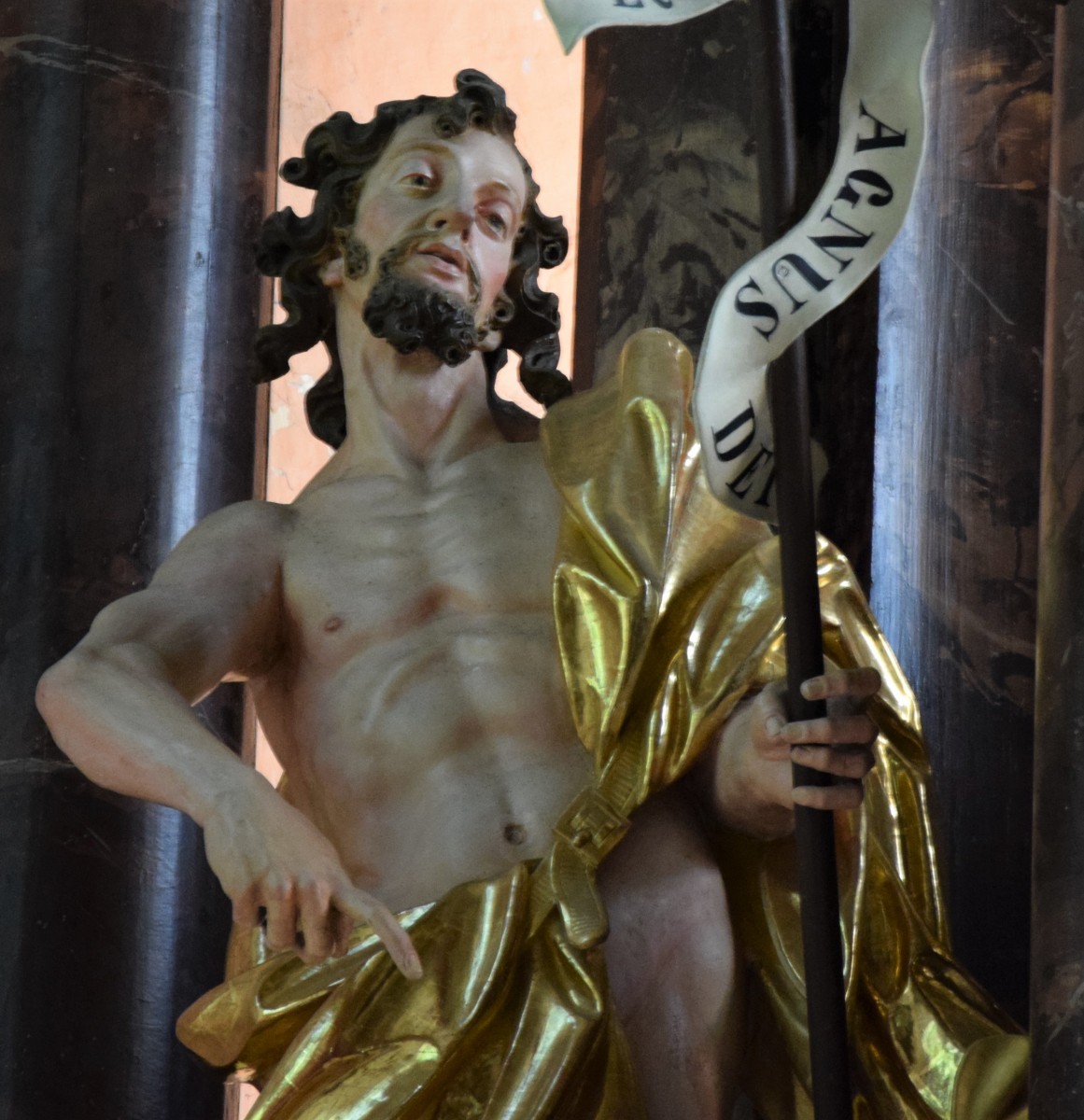
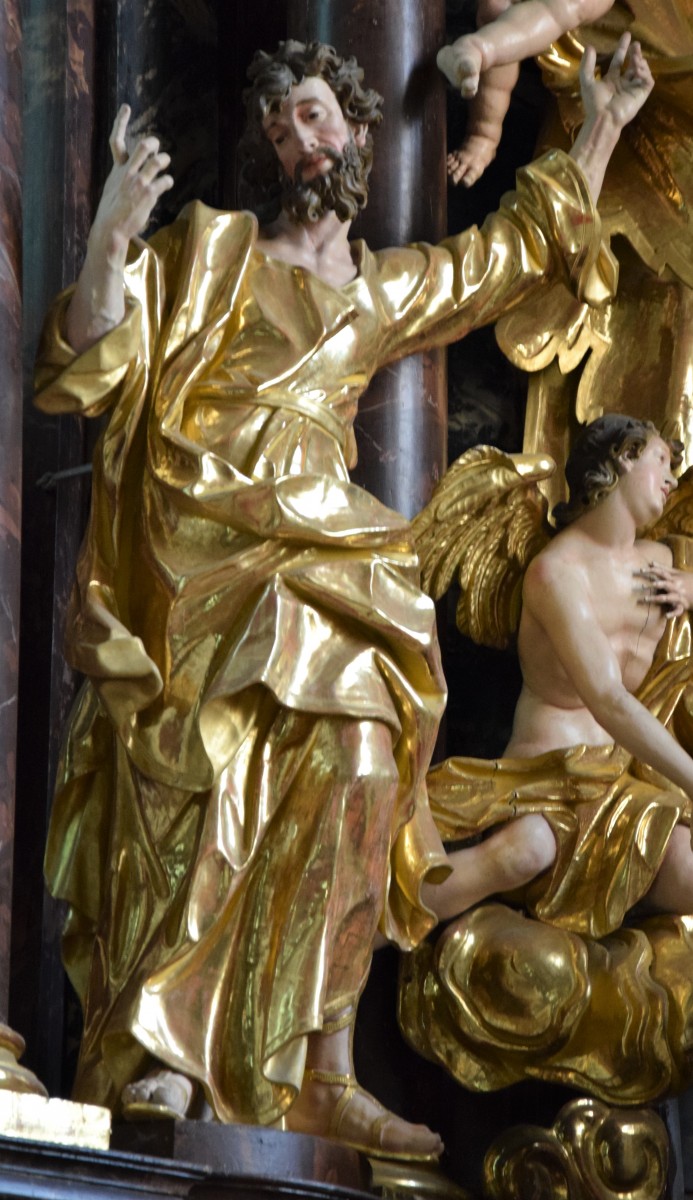
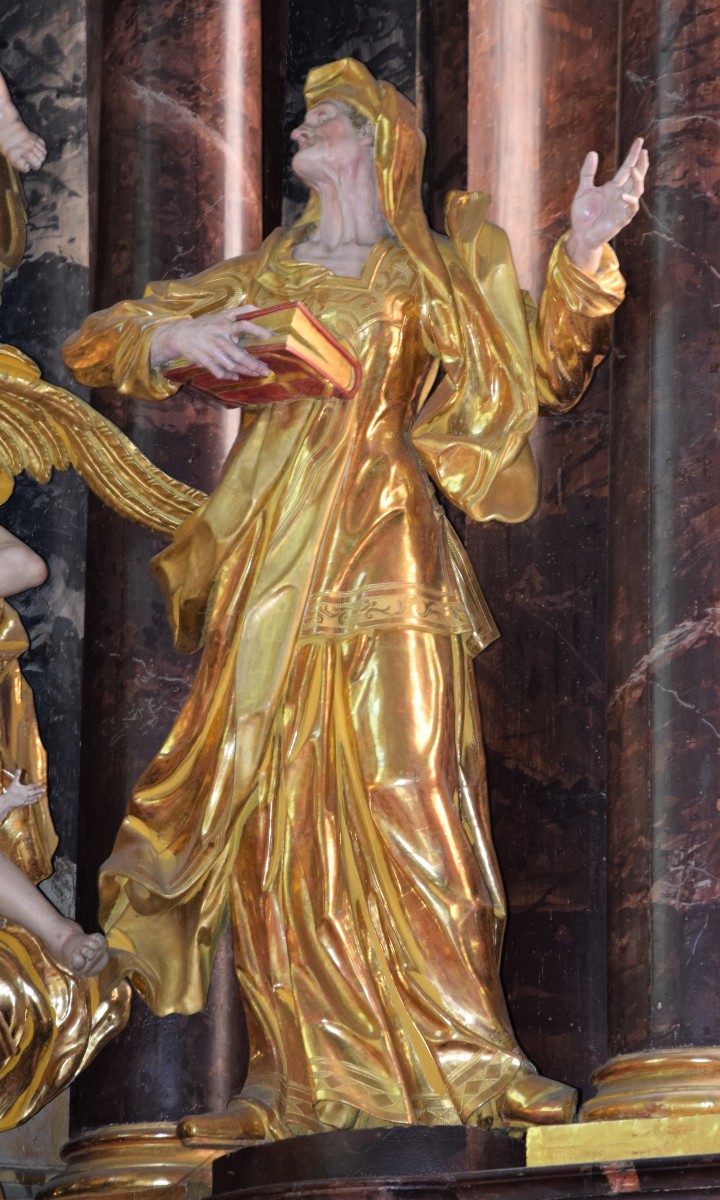
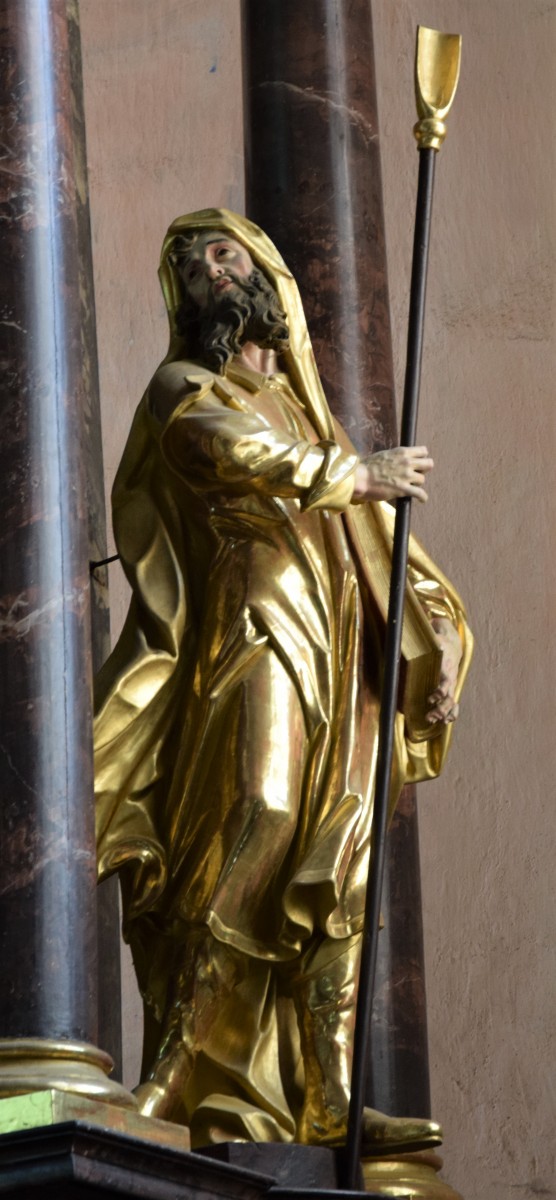
The centre of the remarkable high altar is dominated by the sculpture of Madonna with Child from the 15th century. They are flanked by four saints: Far left there is the sculpture of St John the Baptist which appears highly ecstatic with a misty-eyed facial expression and pathetic gesture. It is comparable to the sculpture of Margrave Leopold of the altar of St John of Nepomuk in the parish church of the Holy Blood in Graz. Next to him follows the depiction of St Joseph, also highly moved with his arms raised upwards and opulent drapery. On the right side, there are St Anna and St Joachim, who turn their heads towards Mary. Very notable is the pronounced contrapost as well as the mannered posture of their fingers.
The sculptures are attributable to the artist’s “expressive” period because they are very vivacious concerning their gesture, clothing and physiognomy.1 The angels on the entablature are also very dynamic and typical for the artist’s oeuvre: wide-spread wings, bouffant clothing that only covers the lower body and expressive postures.
Construction / Execution
The sculptures are made of carved and coloured wood.
Components
- Carpentry
- Completed: 1745 – 1747
- Technique(s): sawing
- Material(s): wood
- Sculpture
- Author: Philipp Jakob Straub (Wiesensteig 1706 – Graz 1774)
- Completed: 1745 – 1747
- Technique(s): wood carving
- Material(s): wood
- Polychromy
- Author: Josef Landschau
- Completed: 1745 – 1747
- Material(s): gold leaf, oil colour, red bole
Comment
The high altar of the collegiate church Vorau served as model for the high altar of Maria Lebing.2
Images
- The high altar of the pilgrimage church Maria Lebing, Hartberg (photo by Christina Pichler, 2018)
- The sculpture of St John the Baptist, high altar, pilgrimage church Maria Lebing, Hartberg (photo by Christina Pichler, 2018)
- St John the Baptist, detail, high altar, pilgrimage church Maria Lebing, Hartberg (photo by Christina Pichler, 2018)
- St Joseph, high altar, pilgrimage church Maria Lebing, Hartberg (photo by Christina Pichler, 2018)
- St Anna, high altar, pilgrimage church Maria Lebing, Hartberg (photo by Christina Pichler, 2018)
- St Joachim, high altar, pilgrimage church Maria Lebing, Hartberg (photo by Christina Pichler, 2018)
Catalogue entry prepared by Christina Pichler and Dagmar Probst
Recommended citation: Christina Pichler and Dagmar Probst, The high altar of the pilgrimage church Maria Lebing in Hartberg, in: TrArS – Tracing the Art of the Straub Family, 2018, (accessed 02/07/2026) URL
