
Location
Austria, Styria, Graz
Parish church St John the Baptist (Grabenkirche) (Pfarrkirche „Hl Johannes der Täufer“ (Grabenkirche))
Geidorf
Original location:
Austria, Styria, Graz
Pilgrimage church Mariahilf (Wallfahrtskirche Mariahilf)
Lend
Artwork
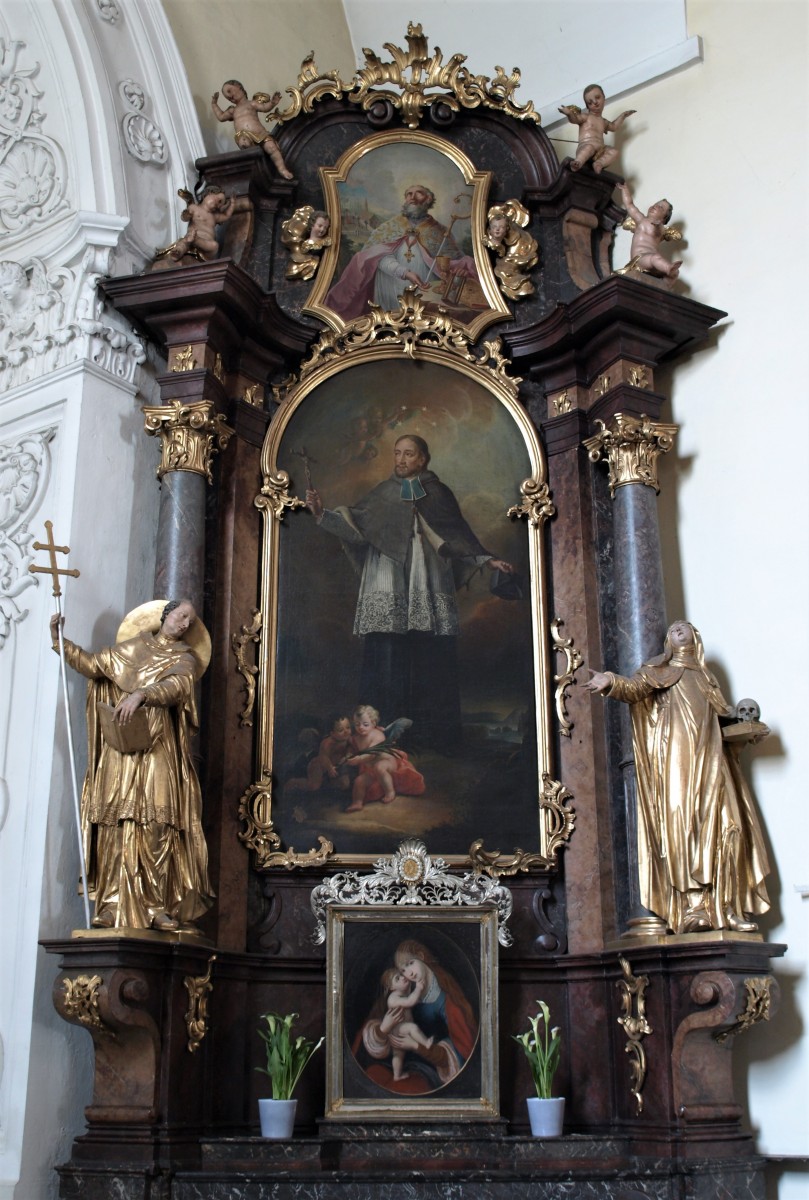
The right side altar at the triumphal arch of the parish church St John the Baptist (Grabenkirche) in Graz
Type
Side altar
Critical History
According to Rochus Kohlbach, the two side altars of Grabenkirche were originally located in the pilgrimage church Mariahilf. In 1786 the church’s priest contacted the prince-bishop konsistorium to announce that the Minorites of Mariahilf had been assigned to deliver two altars of their church to Grabenkirche. In 1792 they were purchased for 100 fl.1 Horst Schweigert dates the altar around the year 1770 and attributes it to Philipp Jakob Straub and his late style.2
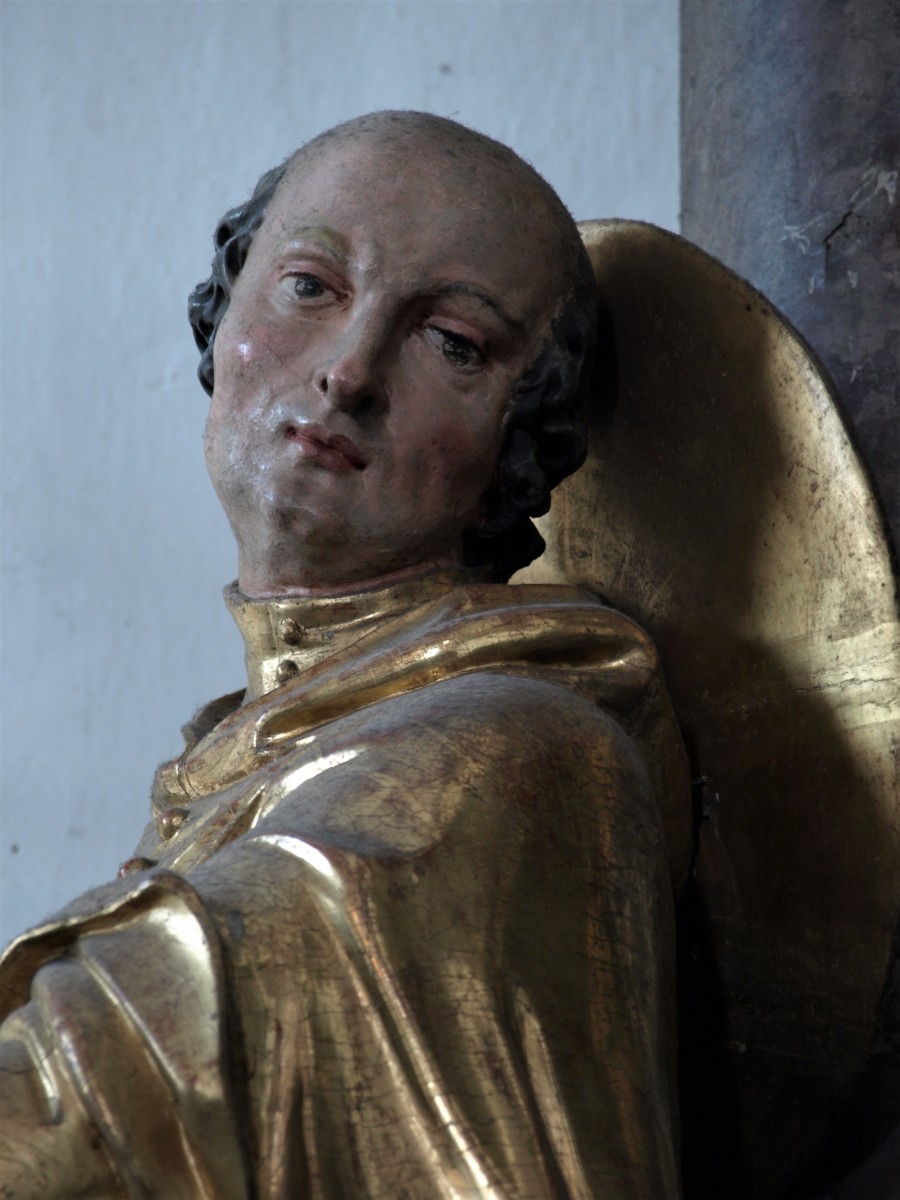
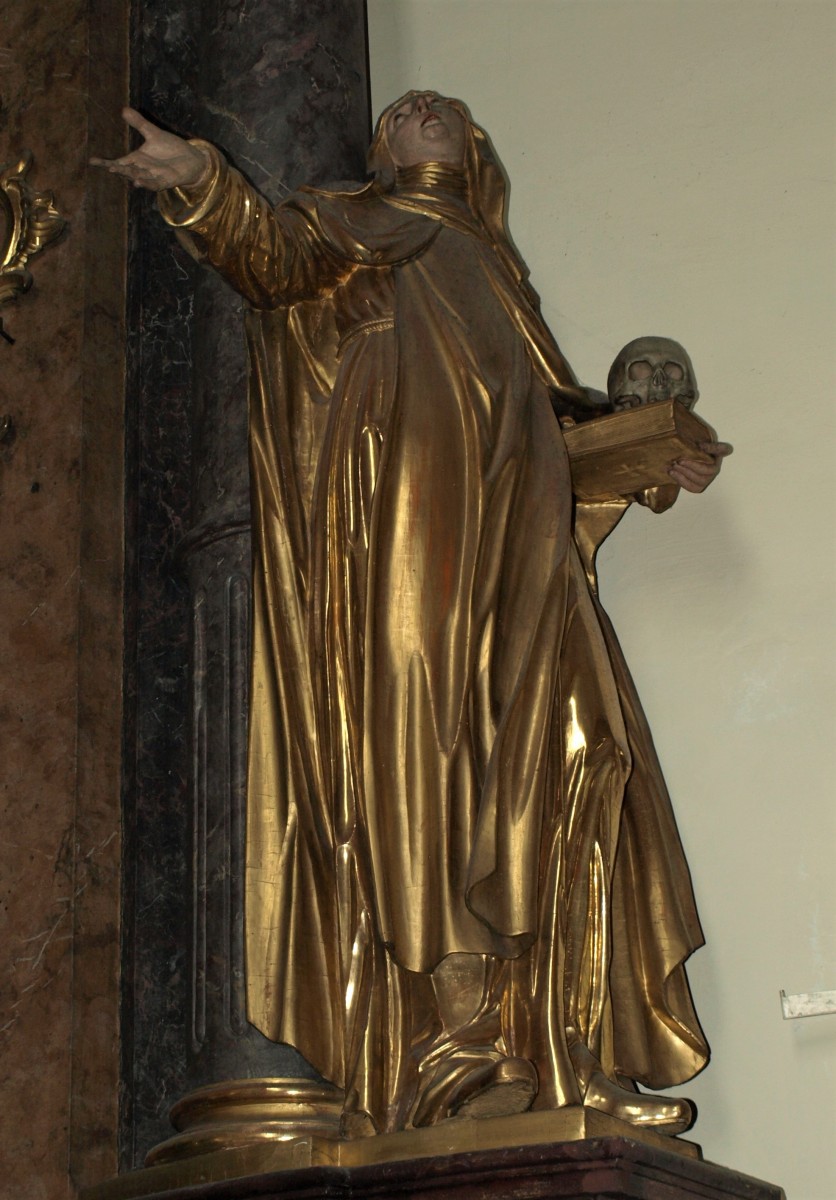
The altars are corresponding to each other. The right one, which is dedicated to St John of Nepomuk, shows two sculptures: On the left, there is St Bonaventura with a cross-staff in one hand and an opened book in the other. It is a good example for Philipp Jakob Straub’s late style: There is reduced movement within the statue’s clothing and body composition and the expressive appearance has weakened in favour of a “cool” overall impression. On the right side is the sculpture of St Margaret of Cortona with arms wide opened and a book in the left hand, on which a skull is resting. Her pathetic gesture is apparently more distinct compared to that of her counterpart, but the drapery of her clothing is also very calm. In the upper zone there are four vivacious putti, which seem to be caught in motion.
While the sculptures of the corresponding left side altar represent a good example for Straub’s “expressive” period, the sculptures of the right side altar comply with the artist’s lat style (reduced movement within the statue’s clothing and body composition, expressive appearance and “cool” overall impression).
Construction / Execution
The side-sculptures are made of carved wood and they are standing on polygonal, gilded plinths.
Components
- Carpentry
- Completed: ca. 1770
- Technique(s): sawing
- Material(s): wood
- Sculpture
- Author: (workshop) Philipp Jakob Straub
- Completed: ca. 1770
- Technique(s): wood carving
- Material(s): wood
- Polychromy
- Completed: ca. ca. 1770
- Material(s): gold leaf, red bole
Comment
The notable differences in the sculptures’ execution suggest the involvement of at least one more artist. A workshop work is conceivable.
Images
- The altar of St John of Nepomuk, parish church St John the Baptist (Grabenkirche), Graz (photo by Anja Lindbichler, 2018)
- St Bonaventura, altar of St John of Nepomuk, parish church St John the Baptist (Grabenkirche), Graz (photo by Anja Lindbichler, 2018)
- St Bonaventura, detail, altar of St John of Nepomuk, parish church St John the Baptist (Grabenkirche), Graz (photo by Anja Lindbichler, 2018)
- St Margaret of Cortona, altar of St John of Nepomuk, parish church St John the Baptist (Grabenkirche), Graz (photo by Anja Lindbichler, 2018)
Catalogue entry prepared by Eva Klein and Christina Pichler
Recommended citation: Eva Klein and Christina Pichler, The right side altar at the triumphal arch of the parish church St John the Baptist (Grabenkirche) in Graz, in: TrArS – Tracing the Art of the Straub Family, 2018, (accessed 27/01/2026) URL
