Location
Austria, Styria, Graz
Parish Church St Andrä (Pfarrkirche St Andrä)
Gries
Artwork
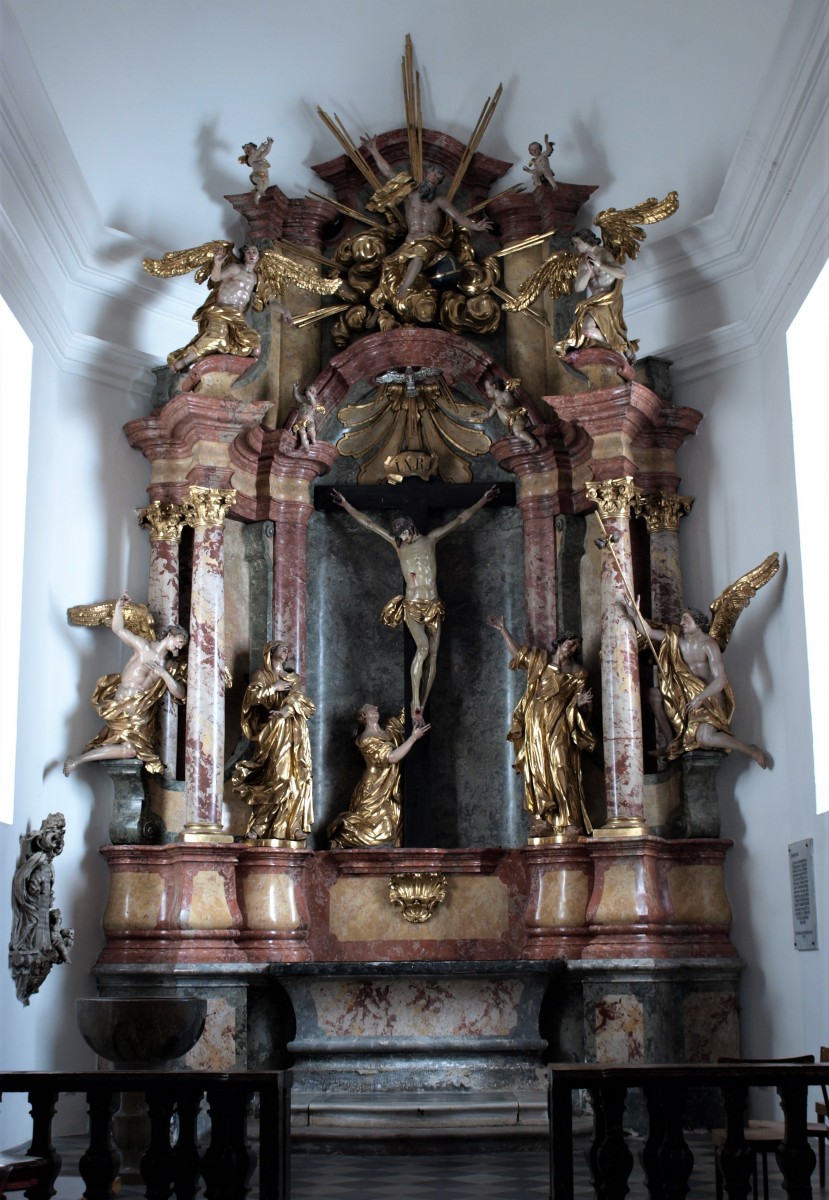
The Crucifixion Altar in the church of St. Andrä in Graz
Type
Side altar
Critical History
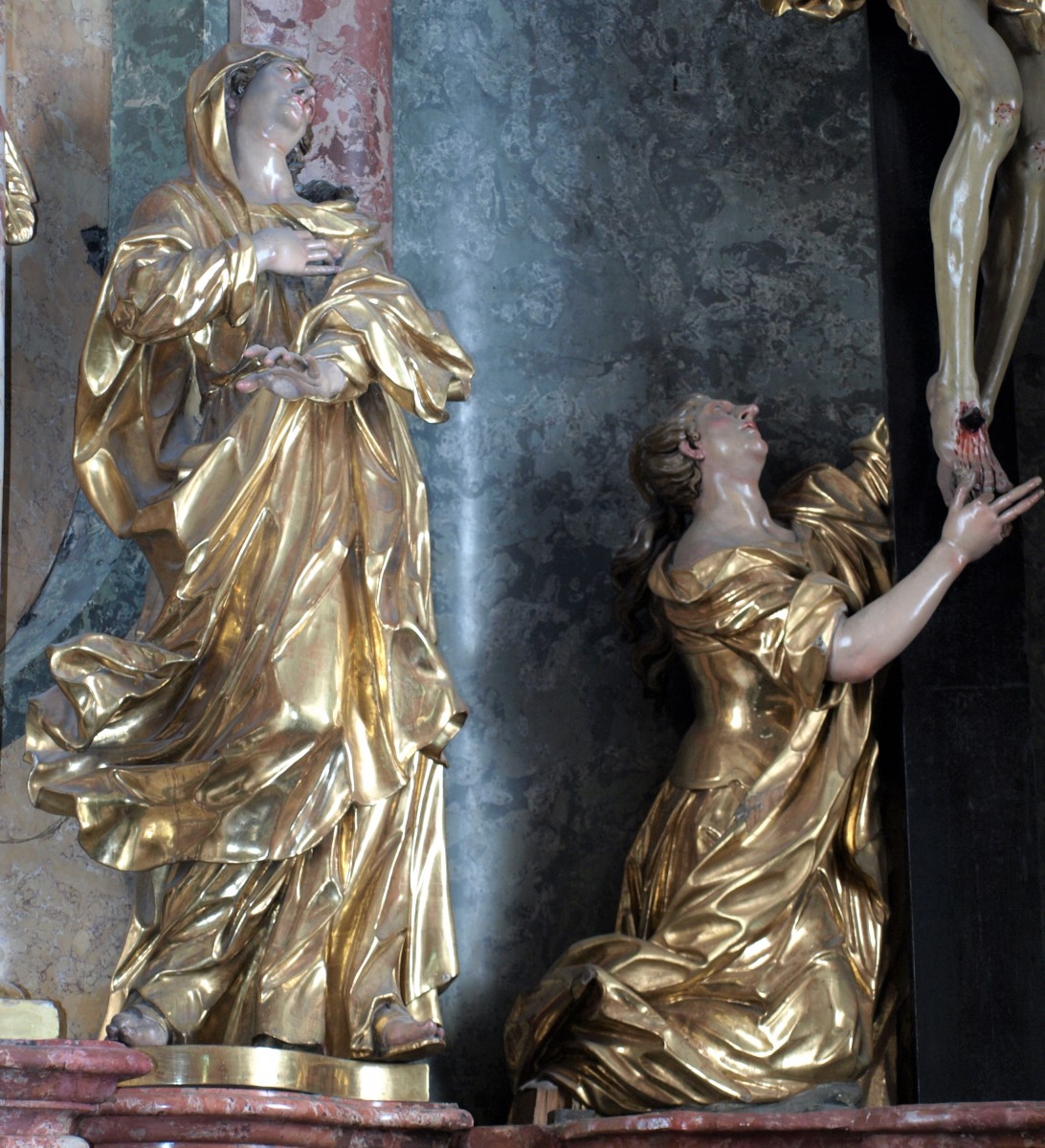
The church was built according to plans by Archangelo Carlone between 1616 and 1627.1 It is a three-nave scale-hall church which is flanked by two chapels.2 In 1670 the right side-chapel was attached at the church’s Epistle side and dedicated to St Barbara (today it’s known as Cross Chapel).3 It accommodates the Crucifixion Altar which was created about 1750 by Philipp Jakob Straub. There is no signature or documentary proof, but the vivacious gestures of the sculptures as well as the expressive drapery of the Mater Dolorosa indicate the authorship of Straub.
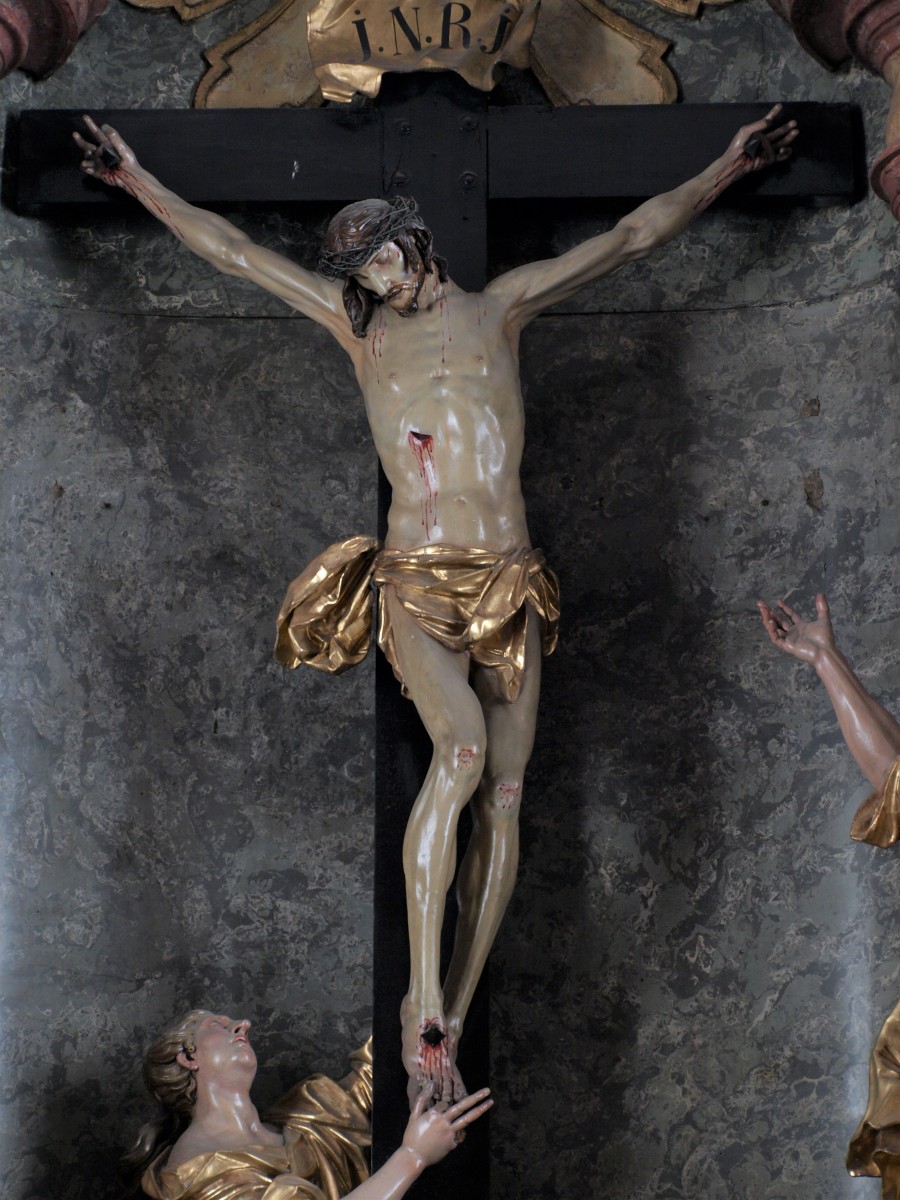
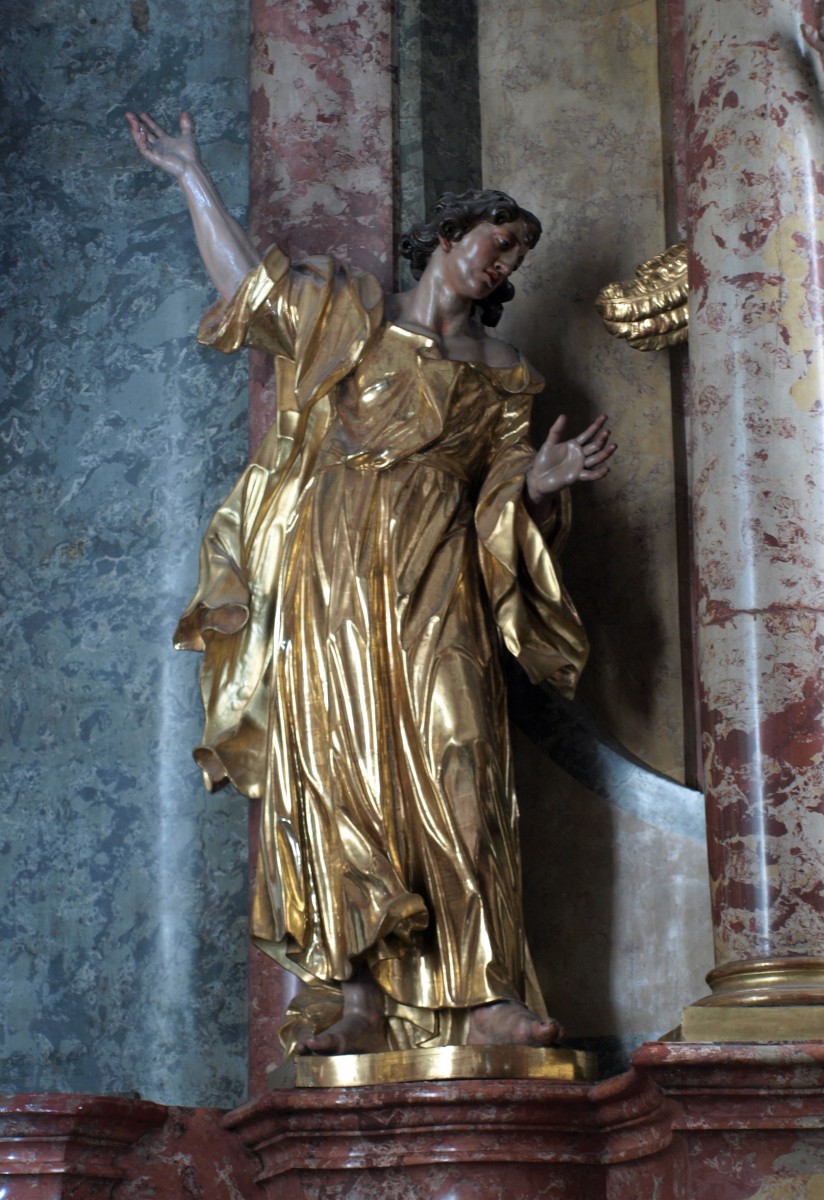
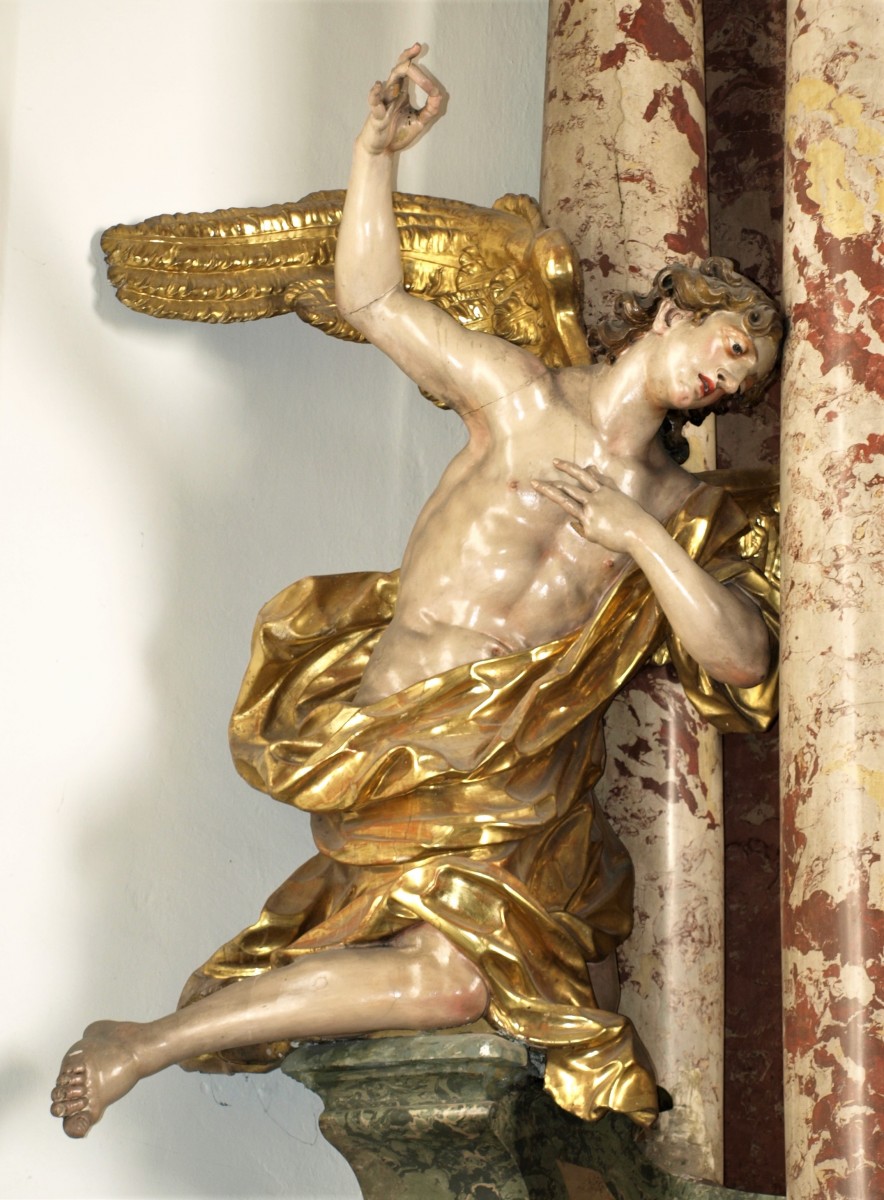
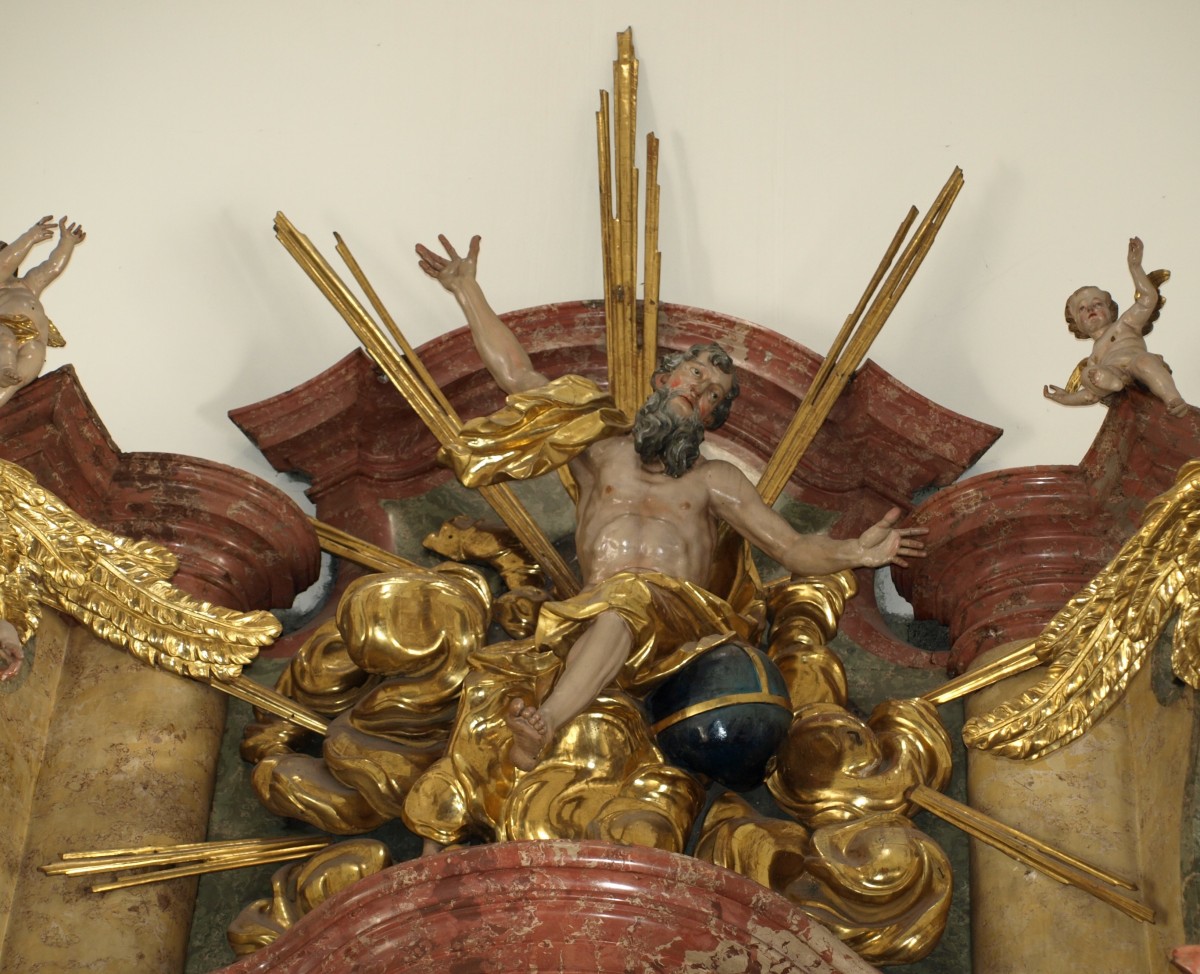
The lower zone shows the crucifixion group with the crucified saviour in the centre. Directly at his feet we see the genuflecting Mary Magdalene, genuflecting and looking up to Christ. They are flanked by Mary, standing in a very pronounced contrapost with one hand on her heart and one arm slightly raised in front of her. Her face expresses deep sorrow. Her coat is following the movement of her free leg and illustrates the artist’s brilliance in the composition of drapery. On the other side there is Apostle John, his body strongly curved to the right. His face is turned away from the crucified, the right hand raised up to him. At the outer edge two angels with wings wide spread are kneeling on volute-consoles. The right one holds a lance (arma Christi). The upper zone shows God the Father throwing on a cloudscape, both arms widely outspread. He is flanked by two angels and surrounded by four putti. All in all it is a very emotional depiction.
Construction / Execution
The altar’s construction is typical for the time of its origin. It’s a sarcophagus altar with rear part, which – together with the communion table – supports the retable.
Components
- Carpentry
- Completed: ca. 1750
- Technique(s): sawing, wood carving
- Material(s): wood
- Sculpture
- Author: Philipp Jakob Straub (Wiesensteig 1706 – Graz 1774)
- Completed: ca. 1750
- Technique(s): wood carving
- Material(s): wood
- Polychromy
- Completed: ca. 1750
- Material(s): gold leaf, red bole
Images
- The Crucifixion Altar in the Church St Andrä in Graz (photo by Anja Lindbichler, 2018)
- Crucifix, Crucifixion Altar, St Andrä (photo by Anja Lindbichler, 2018)
- Mary Magdalene and Mary, Crucifixion Altar, St Andrä (photo by Anja Lindbichler, 2018)
- Apostle John, Crucifixion Altar, St Andrä (photo by Anja Lindbichler, 2018)
- Angel (left), Crucifixion Altar, St Andrä (photo by Anja Lindbichler, 2018)
- God the Father, Crucifixion Altar, St Andrä (photo by Anja Lindbichler, 2018)
Catalogue entry prepared by Christina Pichler and Dagmar Probst
Recommended citation: Christina Pichler and Dagmar Probst, The Crucifixion Altar in the church of St. Andrä in Graz, in: TrArS – Tracing the Art of the Straub Family, 2018, (accessed 27/01/2026) URL
